
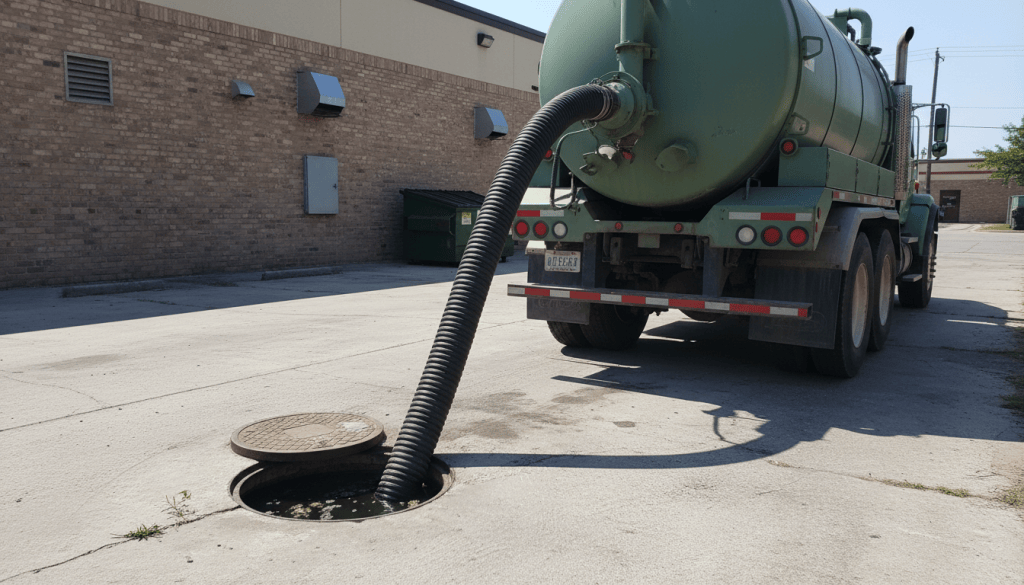
Short answer: small indoor grease traps typically cost about $120 to $250 per cleaning. Outdoor grease interceptors of common sizes, up to about 2,000 gallons, typically cost $150 to $500 per pump-out, and very large tanks cost more. A service agreement and a regular schedule keep you at the low end.
Below are published prices from two sources, the extra fees that raise a bill, what a year of service costs under real city schedules, and how to keep the cost down.
How much does grease trap cleaning cost?
Prices depend mostly on the size of the trap. The table compares an industry price guide with a price list published by the City of Tempe, Arizona, for its grease cooperative program.
| Trap type and size | Industry price guide | City of Tempe cooperative (March 2025) |
|---|---|---|
| Small indoor trap | $130 to $200 on a service agreement; $200 to $250 for a one-off visit | $118 per service |
| Outdoor interceptor, 300 to 350 gallons | Not listed | $150 |
| Outdoor interceptor, about 1,000 to 1,500 gallons | $240 to $330 per pumping on a contract | $270 (1,000 to 1,050 gallons) |
| Outdoor interceptor, 2,000 gallons | Not listed | $500 |
| Very large interceptor, 6,000 to 10,000 gallons | Not listed | $1,500 to $2,400 |
The industry guide puts the full range at $120 to $1,100 per pumping, with the top end for very large traps that haven’t been pumped in years. It also notes the first pumping with a new provider tends to cost the most, because of heavier buildup.
What extra fees should you ask about?
Base prices assume normal access during normal hours. Tempe’s price list shows the kinds of add-ons that can raise a bill:
| Add-on | Indoor trap | Outdoor interceptor |
|---|---|---|
| Emergency service within 24 hours | +$75 | +$225 |
| After-hours service (3:00 p.m. to 5:30 a.m.) | +$125 | +$200 |
| Extra hose | +$65 | +$75 |
| Missed scheduled service | $50 per visit | $200 per visit |
| Line jetting | $265 per hour | |
What drives the price?
- Size: a 20-gallon under-sink trap takes minutes; a large interceptor takes hours and a vacuum truck.
- Time since the last service: heavy buildup costs more to remove.
- Access: long hose runs, basements or second floors can need extra hose or a portable unit.
- Timing: emergency, after-hours or exact-time requests cost more.
- Contract or one-off: recurring service agreements are priced lower per visit.
What does a year of grease trap service cost?
Your city’s schedule sets how many pump-outs you pay for. For a 1,000 to 1,500 gallon outdoor interceptor at the industry guide’s $240 to $330 per pumping:
| Required interval | Example cities | Pump-outs per year | Estimated yearly cost |
|---|---|---|---|
| Every 90 days / 3 months | Lubbock, Corpus Christi, Chattanooga | 4 | $960 to $1,320 |
| Every 6 months | Lexington | 2 | $480 to $660 |
How to keep grease trap costs down
- Get a service agreement. Regular visits are priced lower than one-off calls.
- Don’t let it build up. Neglected traps cost more to clean and risk emergency fees.
- Keep the lid reachable. Clear access avoids extra hose and missed-visit charges.
- Keep food out of drains. Scrape plates into the trash and use sink strainers.
- Ask about bundling. The industry guide notes that combining trap service with used cooking oil collection may lower the price.
- Ask for an itemized quote. Compare the base price and every add-on, and confirm the hauler holds any permit your city requires.
Get an exact price for your kitchen
Tell us your trap type and size, and a local grease trap service provider will contact you within 1 business day with a quote. It’s free, with no obligation to hire.
Sources
- ThePricer, Grease Trap Cleaning Cost (undated industry price guide)
- City of Tempe, Grease Cooperative price list (effective March 1, 2025)
- City schedules: see each city page for its official source
By the Grease Trap Guide team. How we make our guides. Prices are published estimates, not quotes; your local price may differ. Last reviewed October 2026.

