
Grease trap rules and free service quotes, city by city
Restaurants and commercial kitchens have to keep grease traps and interceptors pumped on a schedule set by their local utility or city. Miss it and you risk backups, odors, and compliance problems. Grease Trap Guide explains your local rules in plain language and connects you with local service providers for free quotes.

What we can help with
01
Indoor grease traps
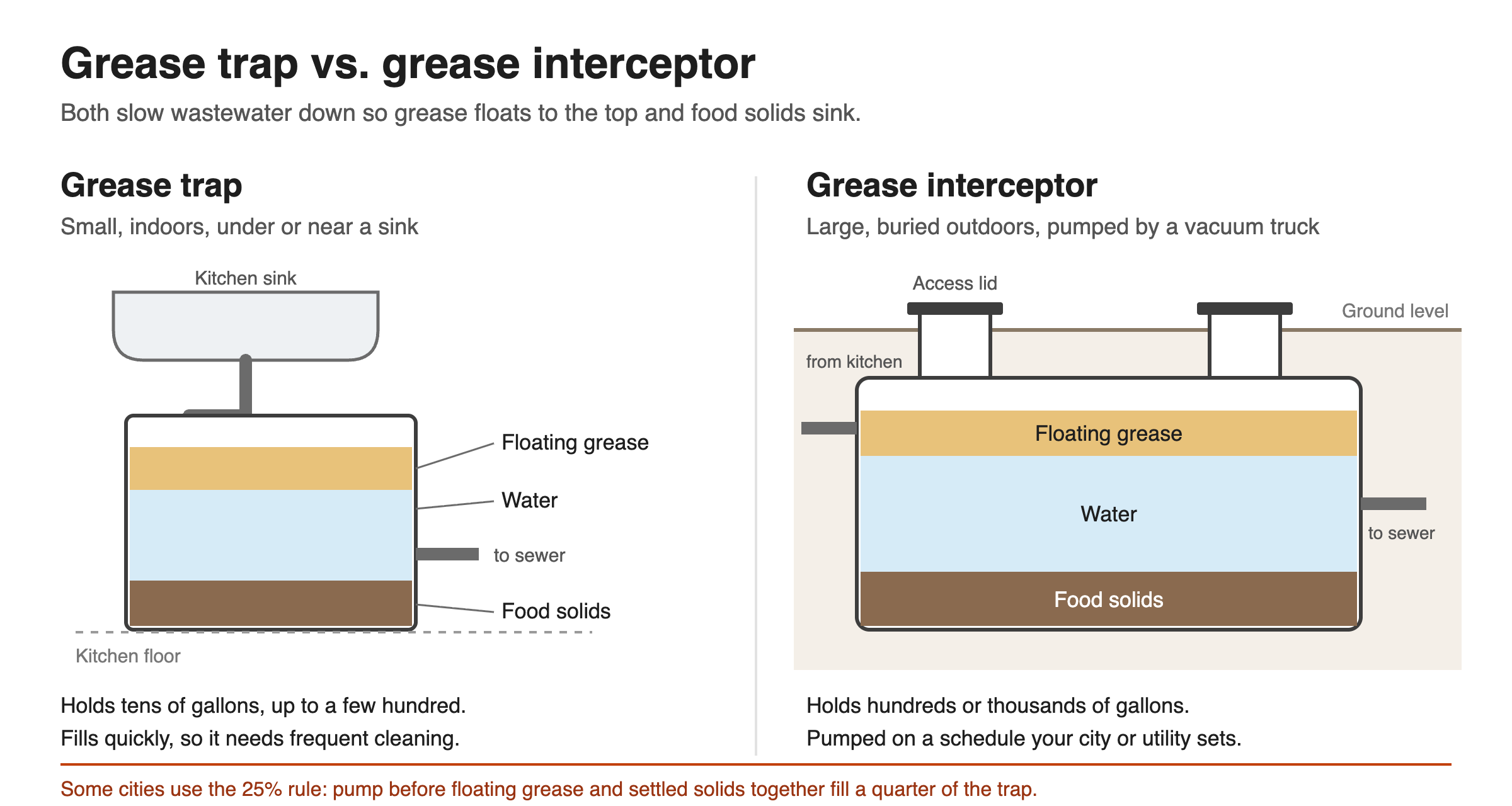
Small units under or near a sink. They fill quickly, so they usually need cleaning much more often than outdoor interceptors.
02
Outdoor grease interceptors
Large in-ground tanks holding hundreds or thousands of gallons, pumped by a vacuum truck on a schedule set by your city or utility, often every 90 days or sooner.
03
Compliance records
Most local programs require pump-out records, such as trip tickets or manifests, kept on site and shown to inspectors on request.
Find your city’s rules
How it works
- Tell us about your kitchen: location, trap or interceptor size, and when it was last serviced.
- We pass your request to a local grease trap service provider.
- The provider contacts you with a quote. You decide whether to hire them. There’s no cost to you for using this site.
Grease Trap Guide is a referral service. We don’t pump grease traps ourselves. Learn more about how we work.
Guides
- What is a grease trap and how does it work?
- How often should a grease trap be cleaned? Rules in 6 cities
- Grease trap cleaning cost: what restaurants pay
- Grease trap installation cost: real prices and grants
- Grease trap vs. grease interceptor
- Grease trap inspections: what to expect
- Texas grease trap rules
Common questions
What is the 25% rule?
Many cities require a grease interceptor to be pumped once the floating grease and settled solids reach 25% of its depth or capacity, even if the regular pumping date hasn’t arrived yet. Check your city page for the exact local wording.
How much does grease trap cleaning cost?
It depends on the size of your trap, how often it’s serviced, and your area. Published industry price guides list roughly $130–$200 per cleaning for small indoor traps on a service agreement, and roughly $240–$330 per pumping for 1,000–1,500 gallon outdoor interceptors. Request a quote for an exact price.
What records do I need to keep?
Most programs ask you to keep the hauler’s manifest or trip ticket for every pump-out, often for several years. Requirements vary by city, so see your city page.
Get a free grease trap quote
Tell us about your kitchen and a local service provider will contact you within 1 business day. Free, with no obligation to hire.

