
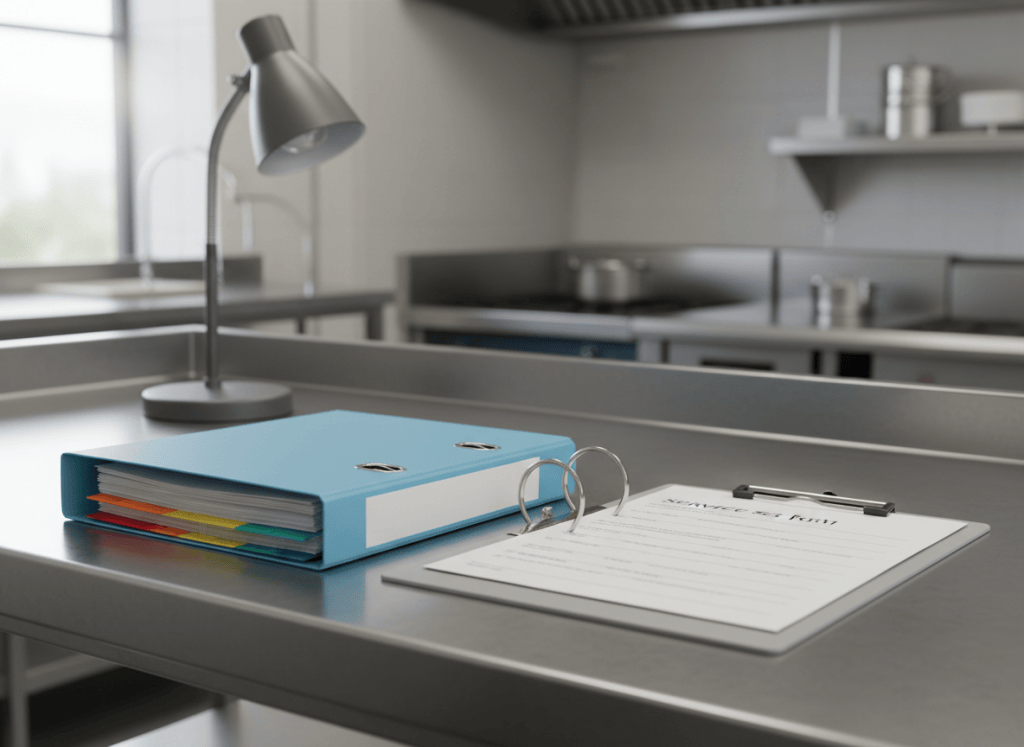
Short answer: grease trap inspectors usually check four things: your maintenance log and pump-out records, whether the trap or interceptor is accessible and not too full, how your kitchen keeps grease out of drains, and how you store and recycle used cooking oil. Keep records on site and service the trap before it reaches your city’s limit.
What do grease trap inspectors check?
Published inspection checklists from city grease programs, such as Bellevue, Washington’s and the City of Lawrence’s, cover the same core items:
- Maintenance log: available, up to date, and showing how often the trap is cleaned.
- Access: the trap or interceptor can be reached and opened, with nothing blocking it.
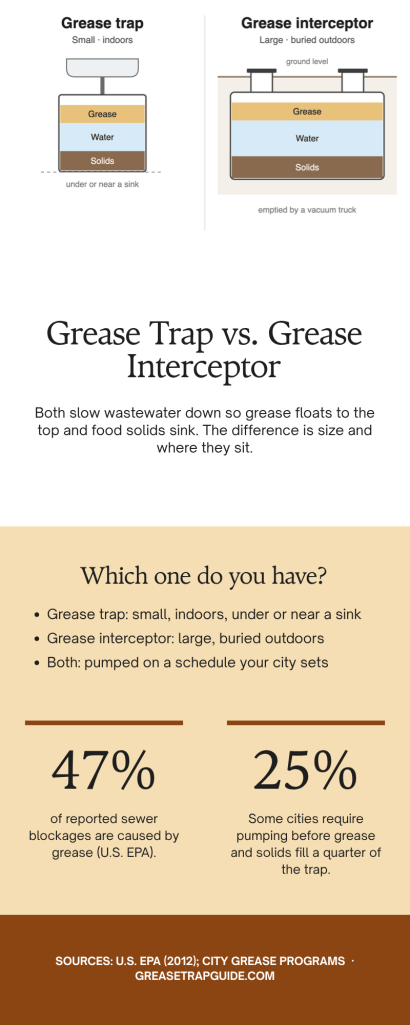
- How full it is: Bellevue’s checklist, for example, flags an interceptor holding more than one-third of its depth in grease or more than one-quarter in sediment.
- Kitchen habits: food waste goes in the trash, not the drain; dishes are dry-wiped before washing; staff are trained; “No Grease” signs are posted.
- Used cooking oil: recycled, with records, in covered containers kept away from storm drains.
- Spill supplies: absorbent pads or similar materials on hand.
- Exhaust hood filters: cleaned regularly, with records.
Your own city’s checklist may differ, so ask your grease program for a copy.
How inspections work in six cities
| City | What the program says about inspections and records |
|---|---|
| Chattanooga, TN | Each food service establishment is inspected at least once a year; you must give access and open the equipment. Records kept at least 3 years. |
| Corpus Christi, TX | Inspection frequency depends on compliance history: less often when compliant, more often after a problem. |
| Amarillo, TX | If an inspector finds the trap needs service, it must be done within 10 business days; if not done by re-inspection, the case goes to the Environmental Health Department. |
| Knoxville, TN | Maintenance logs and hauler manifests for the previous 12 months kept on site for inspectors. |
| Lubbock, TX | A trip ticket for every pump-out kept on site for 3 years. |
| Lexington, KY | Your permit may require more frequent service than the published minimums. |
What happens if you fail a grease trap inspection?
It depends on the city. In Amarillo, you get 10 business days to have the trap serviced; if a re-inspection finds it still isn’t done, the case goes to the Environmental Health Department. Penalties vary widely by city: the U.S. EPA reported that New York City, after finding a 73% non-compliance rate among restaurants, set a fine of $1,000 per day.
Checklist before your next inspection
- Put the maintenance log and every manifest or trip ticket in one binder, in date order.
- Check your last pump-out date against your city’s schedule (see the rules by city).
- Clear anything stored on or around the trap or interceptor lid.
- Post “No Grease” signs at sinks and remind staff to scrape plates into the trash.
- Make sure used cooking oil containers are covered and pickup records are on file.
- Keep absorbent pads near the oil storage area.
- If you’re close to your limit, book a pump-out before an inspector flags it.
Inspection coming up?
Tell us about your kitchen and a local grease trap service provider will contact you within 1 business day. It’s free, with no obligation to hire.
Sources
- City of Bellevue, Wash., FOG Inspection and Installation Checklists (undated)
- City of Lawrence, Food Establishment FOG Control Inspection Checklist (undated)
- U.S. EPA, Controlling Fats, Oils, and Grease Discharges from Food Service Establishments (2012)
- City rules: see each city page for its official source
By the Grease Trap Guide team. How we make our guides. This summary isn’t legal advice; confirm requirements with your local program. Last reviewed October 2026.

